- Joined
- Oct 25, 2024
- Threads
- 0
- Messages
- 51
- Reaction score
- 75
- Location
- VA Beach, VA
- Vehicles
- ‘25 Bronco, ‘15 Grand Cherokee
Here's to hoping they put out an ICE only version! Probably not going to happen but one can hope.
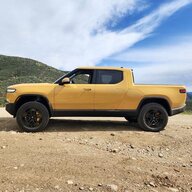

Although I haven't had an electric truck yet I was with your general sentiment until you got toI’ve been driving an electric truck for the past three years — including plenty of long road trips and towing — and here’s what I’ve learned:
1. If you can’t charge at home or at work, an electric vehicle makes zero sense. Relying on public fast chargers for daily commuting is miserable, makes things harder for people who actually need those chargers on long trips, and honestly sets EV adoption back, not forward. Please don’t do it.
2. In most parts of the U.S., public fast charging is good enough for road trips. If that’s your main concern, just stick with a pure electric vehicle — you don’t need a gas range extender if you plan ahead.
3. If you’re towing more than about 100 miles, you still need gas. A fully electric vehicle becomes painful fast, and an electric vehicle with a gas range extender ends up being less practical than just owning a gas truck.
With the Harvester specifically, you end up with both a less capable truck and a less capable electric vehicle. So while this might be a good business decision for Scout — because it’s what most people think they want — it’s probably a bad one for most customers. They just don’t know it yet

Very true. I'm big on having a good service network, close dealers/SCs, a company with good part supplies, etc. I wasn't even sure Scout would push those buttons in the short term. It's one reason I bailed on a (Gen 1) Rivian R1S, though I do have an R2 reservation in (Rivian opening an SC here, but we're also planning on a major move that will put us very close to two Rivian SCs!)A nice way to look at this assuming they don’t cancel the BEV altogether is we will get one after all the bugs get worked out .

I also put my reservation in for a harvester, and then changed my mind to full BEV when it was clear the batteries were smaller.We know that when the Scouts were first announced and reservations opened, a vast majority chose the Harvester option because it truly sounded like the best of both worlds.
As more information started to trickle out, I think a lot of reservation holders were more on the fence about deciding between Harvester or full BEV (Me among them). Many even changed their reservation to drop the Harvester option, but I wonder how many did not? I know, I myself did not change my reservation even though I was starting to lean heavily toward full BEV. So, let's say late 2026/early2027, we get more concrete specs and pricing, and Harvester is a much more expensive option than expected, and also reduces performance more than expected. Reservations holders make a mass exodus away from Harvester (or worse, stick with it to get their trucks earlier even though they would prefer to not have the option). Now we are nearer a 50/50 split, or even 60-40 BEV. Will there be another last-minute pivot by VW/Scout or will it be too late?
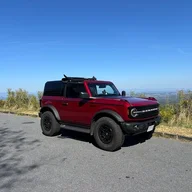
Cool! Brownie points if you can name the tires.Very true. I'm big on having a good service network, close dealers/SCs, a company with good part supplies, etc. I wasn't even sure Scout would push those buttons in the short term. It's one reason I bailed on a (Gen 1) Rivian R1S, though I do have an R2 reservation in (Rivian opening an SC here, but we're also planning on a major move that will put us very close to two Rivian SCs!)
When Scout said they were going to offer CarPlay that was a big perk over Rivian, er, so I guess more wait-and-see (fortunately, the next cycle for us in Q2 '27)
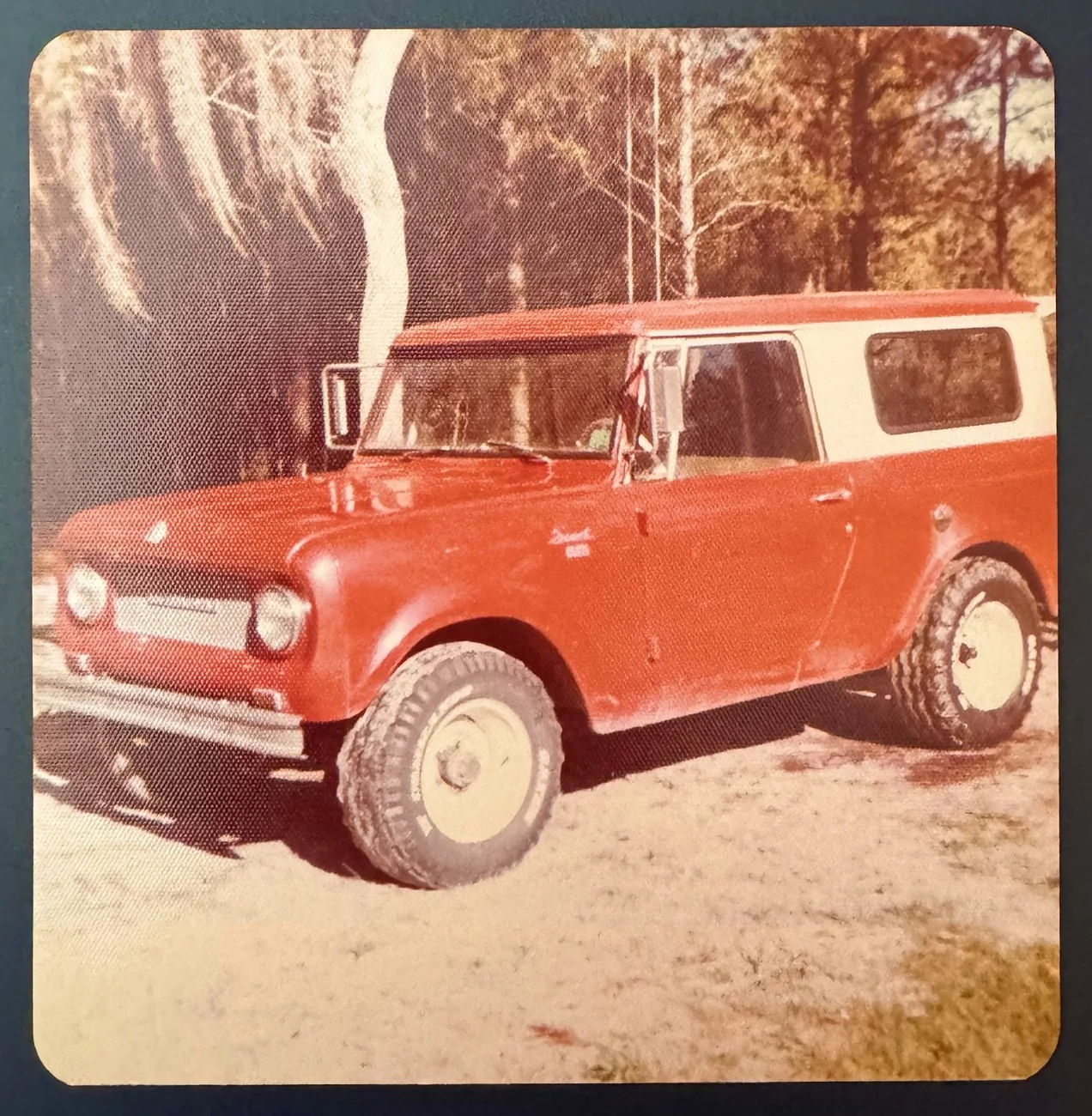
I'd love the Scout, we actually owned on when I was young, I believe it was a '67, lots of good memories about it, my Dad, I thought a Scout would be really fun to own
If not, I've got an iX M70 waiting in the online configurator
Oh, figured I'd toss in the one and only photo I have of the Scout we owned way back in the day (which is a pic of a printed, faded photo)

Even a 60-40 BEV revised split as they near production, which I believe is a pipe dream given current market results of BEV trucks and government realities, would not substantiate a business case for a pivot. Losing expected sales in total could.We know that when the Scouts were first announced and reservations opened, a vast majority chose the Harvester option because it truly sounded like the best of both worlds.
As more information started to trickle out, I think a lot of reservation holders were more on the fence about deciding between Harvester or full BEV (Me among them). Many even changed their reservation to drop the Harvester option, but I wonder how many did not? I know, I myself did not change my reservation even though I was starting to lean heavily toward full BEV. So, let's say late 2026/early2027, we get more concrete specs and pricing, and Harvester is a much more expensive option than expected, and also reduces performance more than expected. Reservations holders make a mass exodus away from Harvester (or worse, stick with it to get their trucks earlier even though they would prefer to not have the option). Now we are nearer a 50/50 split, or even 60-40 BEV. Will there be another last-minute pivot by VW/Scout or will it be too late?
If Scout confirms this news, I'll most likely go ahead and cancel my reservation. I'm not interested in another gas burner, even an EREV. We've already gone all-electric and I have no interest in back-tracking.Scout Reportedly To Delay EV For Hybrid As VW Runs Low On Cash
Full article: https://www.theautopian.com/scout-to-reportedly-build-hybrid-trucks-first/
October 20, 2025One of the more interesting bits Manager Magazin (German publication) reports involves the launch plan for VW’s newest brand, Scout Motors. The revived American nameplate that relaunched in 2022 plans to introduce an electric SUV and truck by 2027. Last year, the company revealed it would also offer its vehicles with a range extender option, which quickly became the most popular drivetrain amongst those placing pre-orders. Going by this article, it sounds like VW is smartly prioritizing those buyers:Scout declined to confirm to me whether this is its plan, but considering the state of the EV pickup truck market in the US right now, it makes the most sense. Even the most popular pure BEV trucks occupy a tiny niche of the market, so building the battery-powered Scouts first wouldn’t have moved the needle.
When Scout first announced the Harvester, they hadn't mentioned that the Harvester-equipped version would be hamstrung with a much smaller battery than the one in the BEV.I reserved a Terra Harvester, but had pretty much decided I was going to switch to just EV when it came time to order. Now I'm not so sure...
There was some rumors in the automotive press but the first time I saw Scout confim the Harvester was launch day 10/24/2024.When Scout first announced the Harvester, they hadn't mentioned that the Harvester-equipped version would be hamstrung with a much smaller battery than the one in the BEV.
We don’t have every detail yet, but we have plenty of info to know the Harvester is clearly a compromise. It’s slower than the full EV (~4.5s vs 3.5s 0–60), has less range (~120–150 miles), tows less (~5,000 lbs vs 10,000 lbs), and is going to require more maintenance with more things to break. That tow rating is lower than every EV truck and even base gas trucks like an F-150 — so already, it’s less capable than both a pure EV and a pure gas truck.Although I haven't had an electric truck yet I was with your general sentiment until you got to
'With the Harvester specifically, you end up with both a less capable truck and a less capable electric vehicle.'
What is your justification for this statement since we don't know the final specs yet and we don't know what the reliability of the electric or gas portion would be?
If you are towing beyond the final weight limit of the Harvester then I'd agree it will be a bad experience.
And it's difficult to speak to other people's priorities when we don't even have market research that manufacturers are using to make their decisions.
But just for me I'd like an electric vehicle with enough range for daily commuting, but I don't have to deal with the inconvenience and uncertainty of rural charging when I'm road tripping or towing.
I rarely have to do maintenance on my ICE vehicles beyond oil changes. I do oil changes myself. Modern ICE engines unless they are poorly designed can go over a decade and hundreds of thousands of miles without major maintenance. So I have no fear or concern of that other than buying from a new manufacturer. But that issue exists with both parts of the drive train and even Tesla has had problems they absolutely should not have. They've mostly been covered under warranty and their fans are very apologetic for the company.
I have a desire for electric power train for the instant torque, in-town savings, ability to do pet mode, power supply for my camper, and desire to help the environment when it makes sense for me and others are doing their part. So I'd rather not full ICE. But i don't want to give up gas and go convenience for trips until rural charging in the US is substantially better.
If Scout removes enough battery that the Harvester isn't a premium, it is the ideal option for me. And while I believe there are significant number of other people that could be better off in their circumstances with all electric, I don't think it's a small minority that is better off hybrid (or ICE over BEV). Even 20% is not a small minority when trying to build a profitable business case.
It just seems strange how stridently BEV fans try to convince everyone else they should really just go BEV, especially when the US is sadly moving away from support right now. This isn't marketed as a city car where BEV totally makes sense. They are adventure vehicles for getting away from the city. And yes a lot of people will buy them too that don't really need them, but that's another problem with another set of common trade-offs that people make that are glossed over.
The substantially reduced tow rating is not confirmed yet. And it would be substantially down from the Terra. But the Traveler BEV rating was always said to be 7k not 10k.We don’t have every detail yet, but we have plenty of info to know the Harvester is clearly a compromise. It’s slower than the full EV (~4.5s vs 3.5s 0–60), has less range (~120–150 miles), tows less (~5,000 lbs vs 10,000 lbs), and is going to require more maintenance with more things to break. That tow rating is lower than every EV truck and even base gas trucks like an F-150 — so already, it’s less capable than both a pure EV and a pure gas truck.
That 150-mile estimate is under ideal conditions. With all-terrain tires and doing truck stuff, expect closer to 90–100 miles. If you want to stay electric-only, you’ll likely be charging to 100% daily — maybe more than once. That kills one of the best parts of EV ownership: convenience. With my R1T, I charge to 70% a couple times a week, don’t think about it, and never deal with oil changes, filters, or random maintenance. That simplicity and low upkeep are a huge part of what makes EV ownership great.
I’ve done road trips all over the country in EVs — many thousands of miles — and it’s not a problem. With access to Tesla Superchargers, stops are easy. Park, plug in, bathroom, snack, done. EV road tripping is actually more pleasant than gas once you’ve done it a few times. People think range anxiety is a big deal, but in a 300+ mile EV, it really isn’t.
I’ve had a range extender before — a BMW i3. I used gas more than I expected, and 99% of the time, a bigger battery would’ve eliminated the need. The engine also turned on just to keep itself healthy, even in EV mode. Let fuel sit too long, and it goes bad. It’s more friction than people realize.
If you don’t tow, a pure EV is better. If you tow heavy, go gas. If you only tow light loads and do most other driving locally, then it could be a good option. I still have a reservation — but coming from an R1T, it would be a clear step down.